
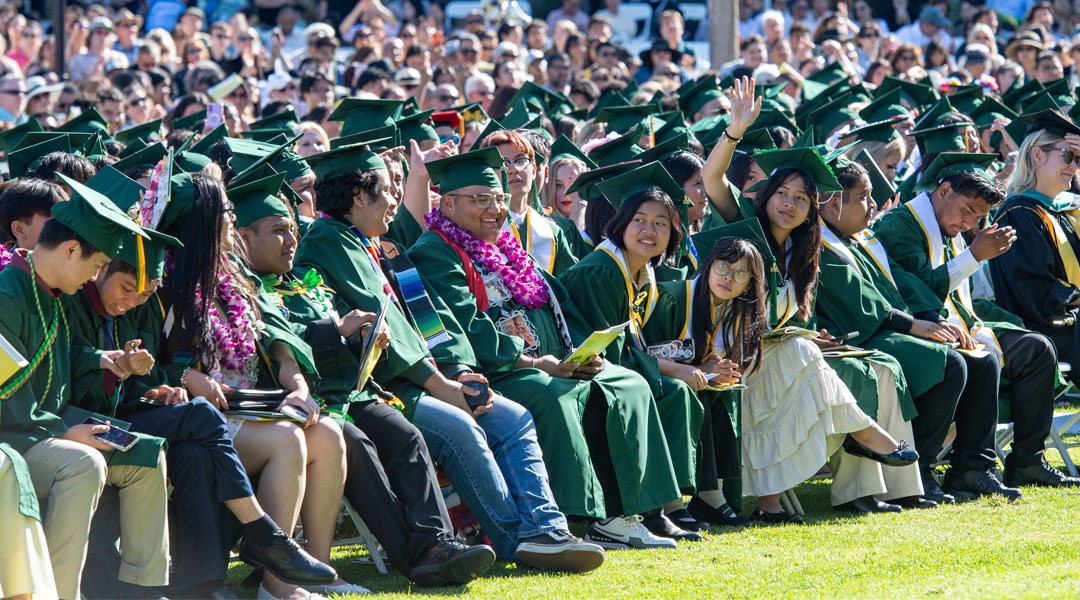
Huntington Beach, Calif. — Golden West College ranks ninth among 89 California community colleges for its three-year graduation rate, according to a recent analysis published by The Chronicle of Higher Education.
The analysis, published October 20, examines graduation outcomes at more than 2,300 colleges nationwide using data from the U.S. Department of Education. At GWC, 47.2% of students in the measured group completed their degree programs within three years, including 17.3% who graduated within two years. The analysis tracked students who began their programs in 2021.
For community college students, the standard time to complete an associate degree is two years. However, many students take longer as they balance coursework with employment, family responsibilities and other commitments. The Chronicle’s analysis uses a three-year graduation window to provide a broader picture of student completion.
GWC’s three-year graduation rate places it ahead of several other California community colleges in the data shown, including Pasadena City College (46.8%) and Orange Coast College (46.2%).
“These results reflect the work happening across our campus to help students succeed,” says President Meridith Randall. “Our focus is on making sure students have the support they need to stay on track and complete their education. That means providing strong academic programs, accessible student services and the guidance students need along the way.”
The analysis also reported that 11% of students in GWC’s measured group transferred to another institution.
The findings were published in The Chronicle of Higher Education’s October 20 article, “What Happens After Students Enroll? Explore Graduation Outcomes at 2,300 Colleges.” The analysis draws on federal data collected through the Integrated Postsecondary Education Data System (IPEDS), which tracks student enrollment, graduation and other outcomes at colleges and universities across the country.